
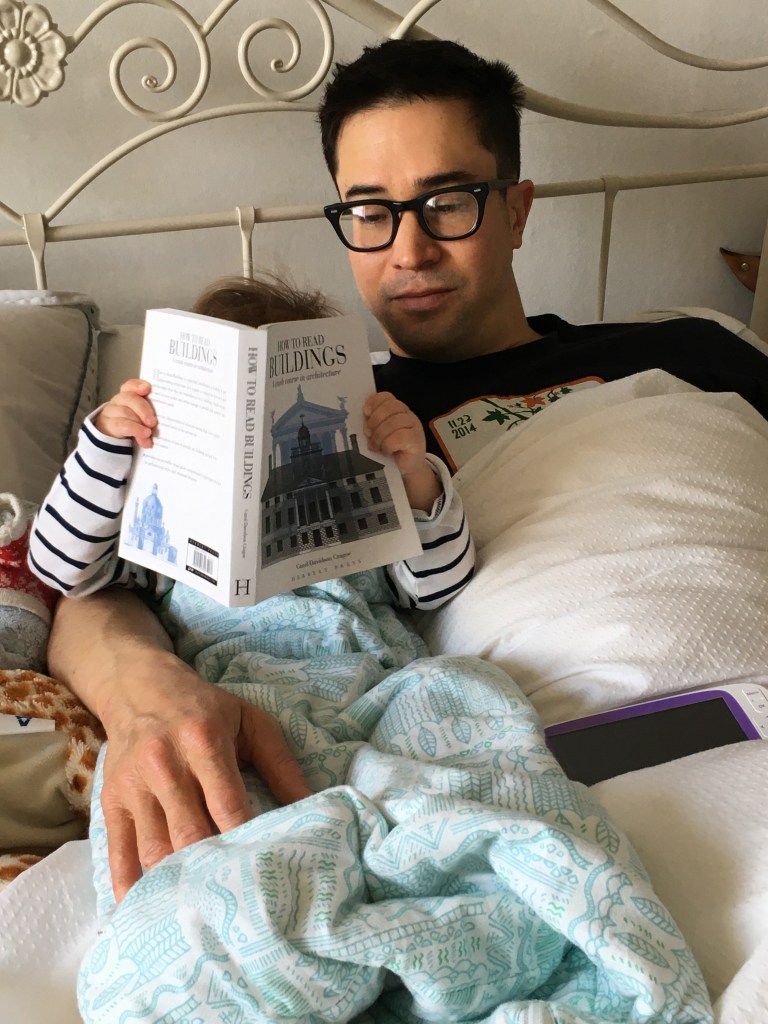
I have gone back and forth about blogging recently; a lot of it feels absurdly self-absorbed and self-centered. At the same time, I also want to leave some sort of record for my children so that they know what is going on in the world and our lives, and this is a good way to do it; I have recently been obsessed with the role that memories play in my life, and in the lives of other people. I want to leave at least a few memories for them to review somewhere, and this is a good place to do that. I also enjoy getting comments and messages about things that I write (and have had two people ask me for honeymoon advice after reading some of the travel writing I did, which is rad). So I am back on blogging, at least temporarily.
And this one is about books.
I have a general rule that I try to follow: if I don’t like a book after a page, I toss it out, no matter how highly rated it is. There are too many great books in the world to spend time reading ones I don’t like. These were some of the books that I read in 2020 that I can recommend, as well as books that I read that I liked enough to read, but would say on retrospect are not worth the time for other people to read.
- Finite and Infinite Games, James Carse. This was one of the shortest books I read this year, but it probably took the longest; it is dense, complicated, requires a lot of thought and concentration, and is absolutely incredible, and changed how I view the world and my place in it. While reading it, I sent individual recommendations of it to probably 20 people when I thought of them. I can’t recommend it enough. However, it is a “cumulative” book – it is not one that you can just dip in and out of, but one that requires reading from the beginning to the end. Some sentences are incredible when you read the whole book, but virtually meaningless when read in isolation – for example, “We cannot become a world without being divided against ourselves.” It makes perfect sense in the context of section 66. Seriously – read this book.
- Drive Your Plow Over the Bones of the Dead. I picked this up on a whim and finished it two days later. I thought that there was a bit too much emphasis on the murders, and not enough on the politics of city v. country and mental health, but she has the ability to transport the reader to a small plateau hamlet in Poland in a way that is captivating and magical. On a snowy, icy night, curl up with this book and a cup of vodka.
- Priestdaddy. A recommendation from Natalie; the last few chapters were dull, but the first several were funny enough to give me nine or ten asthma attacks.
- The Brief, Wondrous Life of Oscar Wao. I approached this with trepidation; could all the reviews be true? Answer: yes. It is not brief, but it is wondrous, and reminded me of Bianca, and 90s hip hop, and the vibrancy of immigrant communities in New England. It is alive.
- Paradise Lost. I should have covered this in college, but the course that covered it was at Scripps, and I only remember that the girl who sat across from me was a brunette named Kirsten who chewed gum a lot. Inspired by this article I found through Arts and Letters Daily, though, I read the whole thing – 217 pages in my unabridged edition – out loud, to my son; like many readers, he really liked the parts with Satan in them, and didn’t really like God. (“I know not what the outcome may be, but this Lucifer is a damned fine fellow, and I hope he may win!”) It was wonderful to read it aloud, and there were several parts that I read over two or three times, just to marvel at the depth and beauty of the language.
- The Guns of August. An excellent account of how countries and governments make terrible mistakes; it is worth reading just for the account of the smell of the German army after a week of marches.
- A Farewell to Arms. As a Hemingway lover, this should have been a foundational book; I kept putting it off, though. It is not as good as his later work, and I don’t think I will read it again, but it fit in with a string of books I read about World War I this year, starting with The Guns of August. It is a good winter book, maybe for January, and hot chocolate with some St. James rhum. Maybe I will read it again, just as I read The Sun Also Rises every May. Probably not. But the escape scene WAS impressively written, and I can still hear the boxcars and see the guards along the railways.
- Mrs Dalloway – again, a foundational book that I never got around to, and loved enough to add it to the list of books that I will try to read annually. Part of the string of World War One books.
- The Remains of the Day. I thought at one point that he was not just stuck in the past – he might be on the spectrum. Turns out that other people with way more knowledge than me have thought the same thing. It reminded me of Moby Dick, too, for some reason I can’t place.
- A Gentleman in Moscow. My sister recommended this; a book about a man confined to a single building for life was perfect this year. It was a great story, but – as I told my friend Emma – you have to accept that the first 60 pages or so are about a character that you really dislike, and then it turns out to be the character you fall in love with later.
- Never Split The Difference. Sankalp recommendation; powerful stuff. I used one of his techniques to get an eBay refund. I…should probably try to use it more.
- High Output Management. Another Sankalp recommendation. I hated it, then felt like I got it, and loved it. Practical and theoretical for businesspeople.
- The Personal MBA – Just after finishing it, I was on a work call and discussed some of the concepts that this book explains. I realized that I have a far better grasp of basic business concepts than many executives that I know, just from this book.
- Mental Models: 30 Thinking Tools that Separate the Average From the Exceptional. I read two books on mental models this year (the other is below), and this was the better one. These come up daily now, and I made flash cards to remember them, which help.
- The Effective Executive. A book I try to read every year; it is hard to start at first, but after a while, it felt like I was getting excellent advice from an old friend and mentor.
- Innovation and Entrepreneurship – again, hard to get into, but so, so worth the time.
As for books that I don’t think are worth the time:
- What It Takes by Stephen Schwartzman and Shoe Dog by Phil Knight: two memoirs by businessmen. I liked both of them, but realized part way through that there is little practical value in reading the (likely ghost-written) memoirs of billionaires; after all, like all of us, they maximize their virtues and minimize their vices, but because of their positions, what they say is taken as gospel by most readers/reviewers. At least Phil Knight recognized the stupidity of his fight with the Japanese, but his casual and fleeting defense of sweat shops bordered on offensive. I am on to biographies in 2021 – autobiographies are not worth the time.
- The Three Body Problem. So…Sankalp recommended this to me, and it WAS a good read, but I got very little from it. At least it was a library book – I don’t want to financially support the author and his noxious political views.
- The Great Mental Models – as mentioned above, this was OK, but a better and more effective use of time is to read the mental models book above.
- The Greatest Trade Ever. It was good, but I didn’t get anything more than I would have gotten from reading the Malcolm Gladwell article (which was better written). If you are looking for business drama, Barbarians at the Gate is more interesting.
There: the best and worst 20 books that I read in 2020.
For 2021, I am making a few new reading rules:
- If I want to read something, I am going to read it, and not prioritize books that I “should” read.
- If I find a subject that I like, I am going to try to read both fiction and non-fiction about it. (Thus, The Guns of August, A Farewell to Arms, Mrs. Dalloway and The Sun Also Rises, all around World War I, which I think gave me a good context into what went into each of the books and what readers at the time may have been thinking.)
- I am going to read prize-winning books. There are professional organizations that should be trusted to have separated the wheat from the chaff, and I am going to trust that Booker, Pulitzer, and Nobel are appropriate endorsements for what I put into my brain.
- I am NOT going to trust UK newspaper recommendations – for example, after reading reviews of my son’s books by The Guardian and The Telegraph, I can’t see how anyone can trust book reviews by these sources. (The Storm Whale is a good cardboard book for a two-year-old, but is it really “intensely atmospheric,” as the Guardian allegedly wrote?)
- If I want to read a book immediately, and I do not own it, I will buy it at full cost.
- If I want to read a book at some point in the future, but not immediately, I will only spend up to £2 on it.
- Corollary to Rule Six: if I see a book I might want to read at some point, and it costs less than £2, I will buy it without a second thought.
- (Practical result of Rule Seven: I have at least 743 books that I have not yet read.)
- If I do not like a book after a page, I will stop reading it, UNLESS it is a recommendation from my wife, sister, Sankalp or Tom, all of whom have impeccable taste.
 Andrew Samtoy
[…] I reached out to my friend Andrew Samtoy for his advice. Andrew is a prolific reader. In the past three years he’s read 60, 63 and 80+ books per year. […]
LikeLike