
“A boy may still detest age,
But as for me, I know,
A man has reached his best age
At forty-two or so.”
R. C. LehmannAt the age of 42, Rosa Parks refused to give up her seat on a bus, Teddy Roosevelt became President, L. Ron Hubbard founded the Church of Scientology, Sigmund Freud stopped having sex, Betty Friedan wrote The Feminine Mystique, and Ulysses S. Grant accepted the surrender of Robert E. Lee, effectively ending the American Civil War.
At the end of August, Martin sent me a message. He was moving down to London in September, and did I know anyone who might want a piano? He is a concert pianist, and his son had bought him a piano when he moved here – a beautiful, dark upright made by a company in London in the late 1800s that I had never heard of but which he said was good. It had ornate inlays, a felt back, two brass candelabra reaching out from the front, and ivory keys. I said that if he couldn’t sell it, we would be happy to take it, and he decided that he would prefer that it stayed with friends than with strangers, and so transport was arranged.
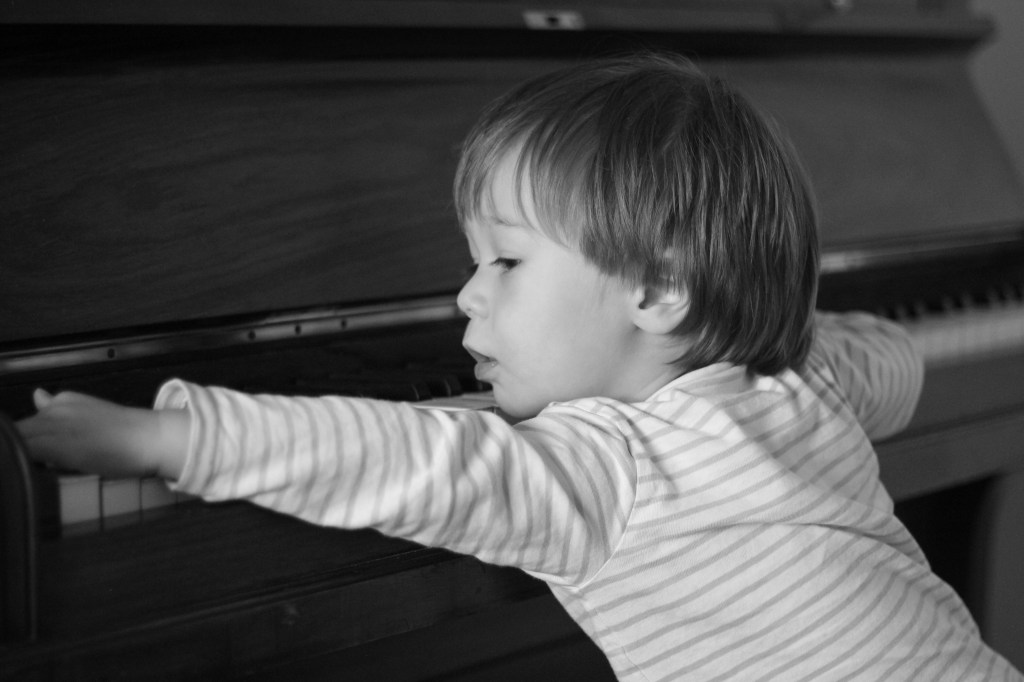
It arrived, and was set up, and within seconds Daniel had tested the keys. Knowing Martin had played it for hours, late at night, with joy and pleasure, made me care for it deeply, and I was struck with the urge to learn how to make it sound nice. I think I played for maybe five or seven years when I was younger; we learned on a Wurlitzer, which my father had purchased when he first arrived in America, spending the entirety of his first paycheck on it, then carrying it from New York to South Carolina to Ohio to California, spending hours and hours on scales, snippets of songs, pieces that he was always trying to master, replaying the same bits over and over again. My mother complained about the noises he made, and we kids were indifferent. He didn’t care about either reaction; he played just for himself.
And now, I have a piano of my own. Maybe one day, Daniel will write something similar about my playing – that he has memories of me muddling through the same pieces over and over again, always messing up in the same places, pausing to check the notes before continuing. At least Alice, who studied music and is an outstanding piano teacher, comes in and suggests improvements for fingering when I ask her for help, and tells me when it is sounding smoother. I am making my way through the theme to The Godfather, and have dreams of one day tackling Liszt; for now, I play snippets here and there, when nobody else is home, and for myself, only. More than snippets – on my own, I will play for thirty minutes before closing it, taking breaks at random moments to practice, to feel the keys, to open the lid and see the hammers hit the strings.
I am turning into my father.


Reading:
When We Cease to Understand the World came up as an Amazon Kindle deal, and I had never heard of it, but something made me decide to put down 99p and download it. Maybe it was that the Booker judges didn’t think it was worthy of the shortlist this year – if they had so honored it, I would have never bought it.
The reason it was not selected, I suspect, is that it is truly extraordinary. The pacing is tragic, horrific, petrifying, a steady drumbeat into chaos, even in translation, and the translation is absolutely superb. Much of it is apparently fiction, but this is a case where the truth should not get in the way of a good story; also, in the parts that really struck me as terrifying, I would look up individual characters and find out that what I doubted could ever be true was actually accurate – like the story of Fritz Haber, told in a manner that makes the reader simultaneously loathe and pity the man. In the end, from start to finish, I was done in 26 hours, and, on closing it, felt like I had looked into the deepest, darkest shames of the most brilliant and depraved souls of the twentieth century.
The following weekend, I opened Breathe. It was a birthday gift, and took me two days to read. My standard for athletic memoirs in Open, by Andre Agassi, which is one of the finest memoirs I have ever read, period; Breathe is not nearly in the same league. However, I am falling more deeply in love with Brazilian Jiu-Jitsu, and Breathe is a good look into its history.
I mentioned that I was reading it to the owner of my Jiu-Jitsu club, Rick. He asked me what I thought of it, and I had to be diplomatic.
“Well…all of the pictures of Helio Gracie make him look like such a nice old man, and the stories are that he was small, and took up Jiu-Jitsu to defend himself. But it sounds like he was not all that nice.”
Rick looked at me and then pointed to a picture of Helio that I had never noticed before, hanging on the wall. “I thought for a long, long time before I put that picture on the wall.” He explained that he thought it was important to show the lineage of his instructors, even if he didn’t approve of their personal lives or characteristics, and that this was an ongoing conversation in BJJ clubs.
I have a huge amount of respect for Rick, and this made me respect him even more.
The other books I read do not bear review. I want to minimize that from now on – if a book is not worth talking about, it is not worth reading.

But talks, and communication:
I write to my best friend from Pitzer, Bianca; long, multi-week letters, often over eight or ten pages. For her part, she often fills a notebook with letters to me and then I get to see her life unfold over months, watching the evolution of thoughts, experiences, learning about the start of something like a friendship or relationship and sometimes learning how it ends, with the highs and lows in between, all in Muji ink from her hand. She is a phenomenal writer, and to have what feels like private books sent from abroad is one of my greatest joys. When Daniel was younger, I would read her letters out loud to him, then discuss them with him and talk through them with him.
I hope he writes letters to people.
I write letters to him. I have a stack of them, written every few months. I am afraid that he might not know I love him.
Ah, Daniel.
He knows numbers, and letters, and recognizes words – Volvo, Mini, Mommy, Daddy, Meg (babysitter), Aga (cleaner). He knows the difference between left and right, and yesterday, I sat on some swings with him for twenty minutes and made up rhymes, which always makes him giggle; he loves word play. I explained what compound words were – pan, cake, pancake – and suddenly there is a new game of finding compound words or making them up, often involving “cat.” Pancat. Briefcat. When I am pushing him in his buggy, we will make up words and he will howl with laughter and people walking by will smile at us in an almost embarrassed way, as if they were trying to catch on to what he found so hilarious.
So a good month. New things, old things; the end of one year of my life, the beginning of the next. Let’s see if this really is as good as Lehmann said it would be.

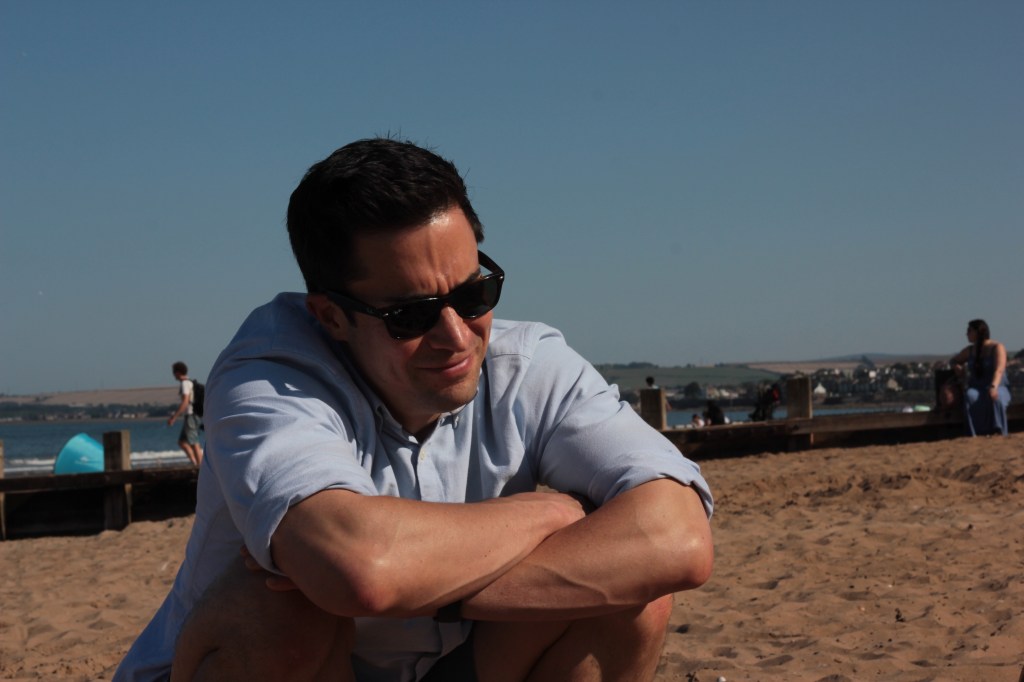

 Andrew Samtoy