One.
A.
There is an old guy at my gym, David, who must be in his eighties. He grew up in Edinburgh, worked for book binders here for his whole career, and is now retired; he goes to the gym four days a week, Monday through Thursday, arriving by 6:15 a.m. every day so he can talk to people while we all stand in line for the doors to open. He is friendly to everyone, is incredibly perceptive and fun to talk to, and makes it pleasant to wait.
One day in August, we were standing, talking, and he started talking about all of the “picture houses” that used to be around the city. I was dimly aware that the building next to my apartment used to be a movie theater, and there was a bigger theater a few buildings up, and another around the corner, but he told me that back in the day, there were movie theaters on virtually every commercial block in the city. They served as anchors for the community, important social and cultural centers, places where anyone could go and catch a cheap show and stay warm and off of the streets. Dave said that when he was young, the front pages of all of the newspapers had movie times for each theater. The only time news got to the front page was when something momentous happened, and even when the Nazis invaded Poland, only some papers bumped their schedules to suggest that war was on the horizon. He then told me that a long time ago, there were also boys and girls clubs everywhere, and parents would get memberships for their kids so that the kids had a place to go and play and stay safe after school, so if they Dave wasn’t at the club playing snooker or football, he was at the theater, or home.
I asked him if they had all closed because of television. He said they happened at about the same time, when kids started to stay home more instead of going out, but didn’t draw causality from it. They let us into the gym then, and Dave moved over to the recumbent bikes (always his first 20 minutes) while I romanticized the past, when communities came together in public places, in real life.
B.
In August, we took Daniel and Nick to a public pool for kids swim hours. Nick…didn’t take to the water as well as Daniel did, but Daniel seemed to really love it, so when a spot came up in the kids swim classes, we grabbed it. When we were just taking him to the pool to paddle around, he liked it, but he stayed very much in his comfort zone and didn’t take risks. I noticed that at the classes, the fact that all of the kids around him were doing things made him want to do them as well – putting his face in the water, for example, or pouring water from a cup onto his hair, or working harder at kicking, none of which he would have done with us alone. It seemed that the very act of being around other kids doing things normalized these activities for him – when everyone else was doing something, it made him think he could or should do the same. So he did.
C.
In August, I “popped” the lower floating rib on my right side. It was in Brazilian Jiu-Jitsu, and I felt it happen, and stopped training immediately. Later, on the tram home, I almost passed out from the pain, but over the course of a few weeks of rest and rehabilitation, it started to feel better. Then, talking about it and researching it, it turned out to be a very common injury in Brazilian Jiu-Jitsu – not only are there YouTube videos about how to fix it, but at least three people I train with have popped their ribs in the last few months. So suddenly, in my own life, I went from feeling as if I was more prone to injury because I am growing older to being just another person who had a really painful, annoying injury that is very common, and actually showed I was part of the tribe.
D.
It was during Daniel’s swim class, when my rib felt sore because I twisted my torso and I ignored it, and then Daniel copied the other kids by launching himself off of the side of the pool, that I started to wonder if many of the things that are broken right now – politics, culture, society, etc. – are being exacerbated by the fact that our communities are so fragmented and self-selecting and isolated from each other. The old days were not absolutely golden or entirely glorious, of course, but there is something attractive about people being forced to participate in a community, and needing to figure out how to get along with each other, and learning social norms; rough edges being smoothed out, and all that. I am sure there are plenty of articles about how single individuals can come up with a conspiracy theory and propagate it through until it becomes mainstream; I wonder if anyone has shown that it is the normalization of this behavior in a group that makes it acceptable, or even encouraged and celebrated.
And it made me also think: writers like BJ Fogg, James Clear, and Charles Duhigg have written bestsellers about how to change habits, and they have some really good ideas, but I would bet that the easiest way to change habits isn’t by focusing on triggers, redesigning environments, or replacing one habit with another, but simply joining a group of people who have normalized a behavior. Want to get fit? Join a running group and ensure you spend time around the other runners. Want to lose weight? Join a group of people who eat paleo, and throw dinner parties with them. Want to read more? Join a book club that challenges you, and meet the other members at a coffee shop to read together.
And it also makes me think: what communities do I want to continue to be a part of, or turn my back on, or join?
I remember going to Stratford-upon-Avon with Lindsay Anne Thorson when we were studying in Cardiff; we got rooms in a crappy B&B, and tickets to the Globe to see the Henry IVs and Henry V, all performed one after another in a marathon by the same actors. Henry resonated with me, but it was his changing relationship with Falstaff that I remembered as much as the Agincourt speech. I remember wondering if Falstaff was a human sacrifice, and if leaders, no matter who they are, at some point have to turn their backs on people in order to move on and reach their full potential; apologies to Goldsmith, but who got you here won’t get you there. Hal had Falstaff, Obama had Jeremiah Wright, Bill Clinton had Roger Clinton.
Maybe Joe Biden has Hunter.
Anyway: as of August, I am going to start paying a lot more attention to the groups of people I am part of, and the ones I need to cut ties with, and the ones I want to join. And I need to pay close attention to the kids that Daniel and Nick spend time with – I don’t want to micromanage their interactions, but I don’t want to have to micromanage them.
And I really need to weigh the balance of Brazilian Jiu-Jitsu. On the one hand, the people I train with are amazing, and elevate me far above what I might otherwise be. On the other, the normalization of catastrophic injuries is literally unhealthy.

Two.
In the summer of 2007, I was clerking with my friend, Asim, at a law firm in Painesville, Ohio. One day, we were in the library, typing away on our computers, when he suggested that we go on a trip to Puerto Rico in August, before school started up again. From Bianca, I was well acquainted with Daddy Yankee, and had a vague understanding of PR’s status as an unincorporated territory, and I knew it was an island, and they made rum, but that was about all. No matter: for some unfathomable reason, flights from Cleveland were cheap, hotels in August were cheap, and it held the promise of an almost-international adventure, so we booked our tickets and, one Saturday morning, boarded a plane.
I don’t remember San Juan. I think we stayed in a hotel on the outskirts of the city, and got a bus into the center; I don’t know what we ate, or drank, or how we made decisions on what to do. This was a year before the first iPhone, and I doubt we even had laptops with us – we probably just had our Motorola Razrs or Nokia 3200s, and maybe a Lonely Planet guide, if that. The second day we were there, though, we decided to go to Culebra, a smaller island off of the East Coast of Puerto Rico’s main island. It was amazingly easy to get a penthouse apartment for next to nothing, and a ferry ride in the morning.
On the ferry, some kids really wanted to hang out with me, so I taught them to do tricep dips off of the seats and look for whales on the horizon while their mothers drank Coca-Colas and ate Funyuns. After a while, Asim came over to me.

“Soooo,” he said. “I was talking to their moms, and it looks like this is the last ferry for a while, because a hurricane is coming through.”
My jaw dropped.
“Sweet,” I said.
We were immortal. Hurricanes couldn’t touch us. Things would be fine.
We landed, and walked to the penthouse – a big, spacious apartment with a balcony overlooking the waterfront. We grabbed some eggs from a corner shop for breakfast, and found a seafood restaurant on the bay for dinner. Asim was Muslim in Cleveland, but not in Culebra; I don’t think I got him to drink beer, but, if I remember correctly, he was unable to moderate his consumption of mixed rum cocktails and champagne. The night was warm, there was a stiff wind blowing, and the only thing I felt was excitement.
I woke up in the morning and started making breakfast. Suddenly, it felt like a thousand people were firing blowgun darts into my ankles. I started swatting at my feet and legs, and insect guts smeared across my skin. Asim heard me yelping, walked in, and suddenly he started dancing around. The only thing that helped, if I remember correctly, was to mop the tiles repeatedly with disinfecting cleaner, keeping them wet; I don’t know how we figured it out, but the ants had sensed the incoming storm and fled their nest, finding the highest point they could. We had thought that our penthouse would be a chick magnet, but it had become a health and safety liability.
After breakfast, we got a taxi to the beach, and told the guy we would call in a few hours when we were ready to come back. It was a deep bay, crystal clear, warm, stunning, and the only other person on the beach was a tall, tanned blonde, who we acknowledged but didn’t talk to. Otherwise, the only reason we had it to ourselves was because everyone was scared of a stupid little hurricane. We swam, explored the shore, and marvelled at our exceptional luck, born of our equally exceptional courage and other positive personal attributes.
Suddenly, Asim pointed to the horizon, and we ran to a beach shelter as the sky opened up. In Cleveland, I had been in whiteout rain, where the drops came so thick and fast that it was impossible to see ten feet outside of my windows; this was harder, more violent, as if God had decided to remind us of our helplessness and correct our pride. Suddenly, through the rain, the blonde, weighed down with bags, was running toward us. She got under the shelter and, dripping, thrown together, we made introductions. Her name was Christina; she was a yoga instructor from Switzerland, and had been camping on the beach. Did she know about the hurricane? Yes, but she was young, and immortal, too.
I think we said that if she wanted, she could sleep on our sofa, but she intelligently and safely declined. Asim and I called the cab and went back to the penthouse and then to the bar, which was the only place to get information. It is quaint to imagine that now, being on a tiny island in the middle of a vast ocean, with no smart phones or wifi, relying on rumors for life-changing decisions.
We ate, and drank, and started mingling, while the rain came through, flooding the streets, then stopping with incredible finality. It was easy to separate the tourists from the locals; we spoke English with the tourists, and, with my limited Spanish, we flattered the locals and mingled the groups together. At some point, Christina came in, and we introduced her to Laura and Sean, a married couple from Illinois, and a group of Chinese tourists Asim had made a special effort to integrate into our circle. It was clear that there was not going to be another ferry for a while, so we were going to need to stay on the island. I don’t remember this, but my photos indicate that we had a party at our place, that the ants had been expunged, and that the night was dry.


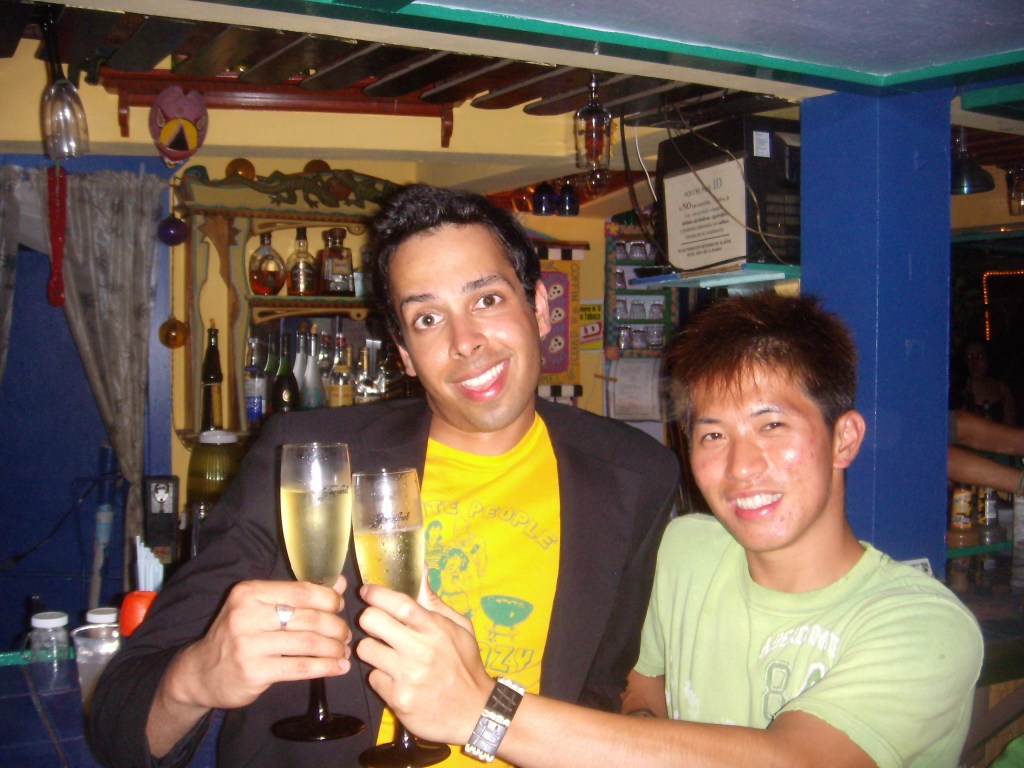
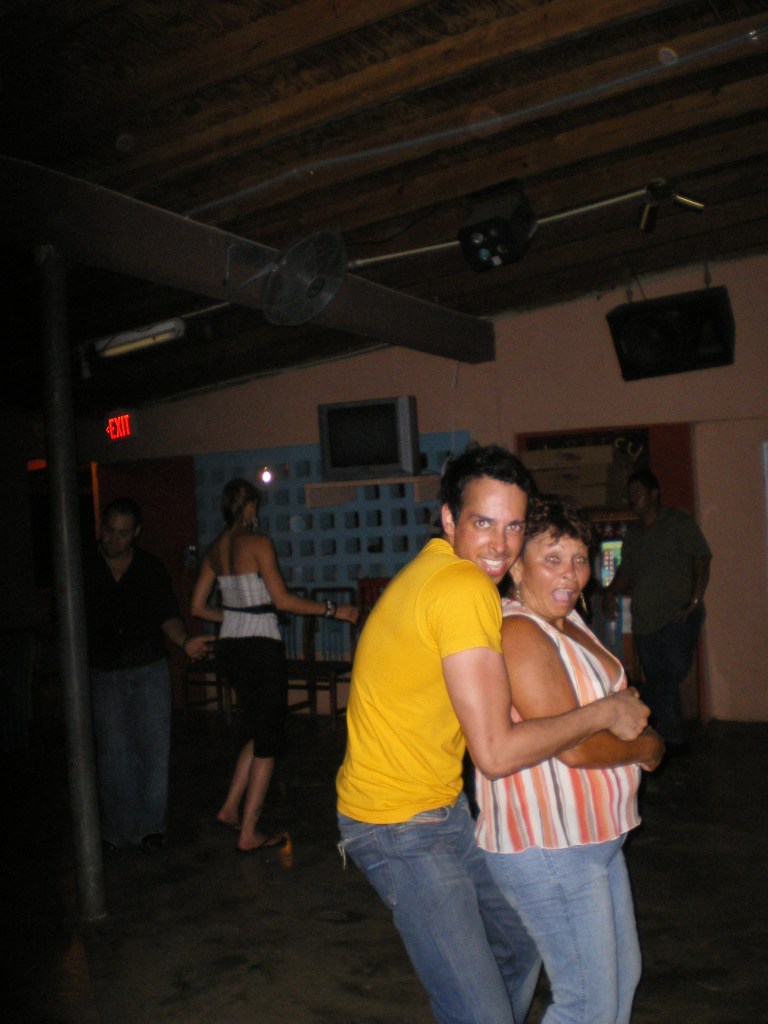
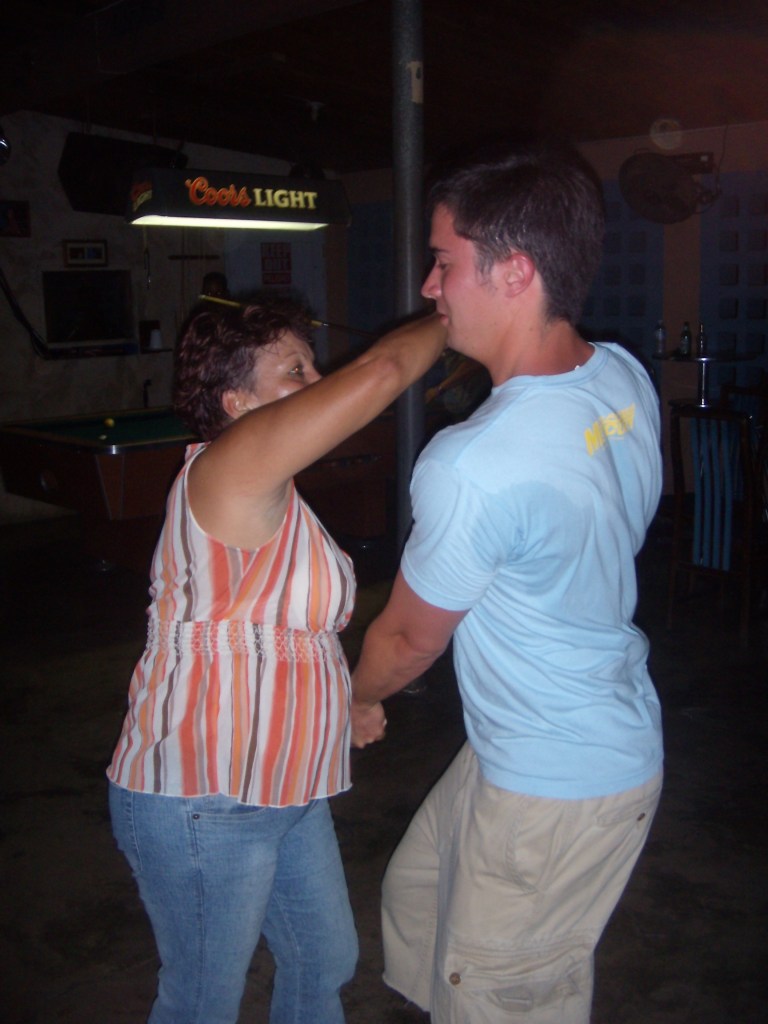
We saw Christina again on the beach the next day. She looked haggered, and exhausted, and asked if the sofa offer still stood. Asim and I, however, had decided to give up our penthouse and, instead, rented a room at the bar – we figured it would be more convenient for eating, drinking, and socializing, and so were moving that night. I think we negotiated a room for her, too, and that night we had a party. I remember pool, and drinks, and dancing. I made a total fool of myself dancing an imitation salsa; my Spanish improved with my alochol consumption, and at one point I was shadowboxing with a local man, then hugging him and ordering another round. Asim was losing a pool game where each sunk ball meant a drink; Sean was winning, but for him, too, each sunk ball meant a drink. I remember sitting on a bar stool, looking across the room, and thinking that nothing outside those four walls existed – not the hurricane, not the ocean, not the universe.
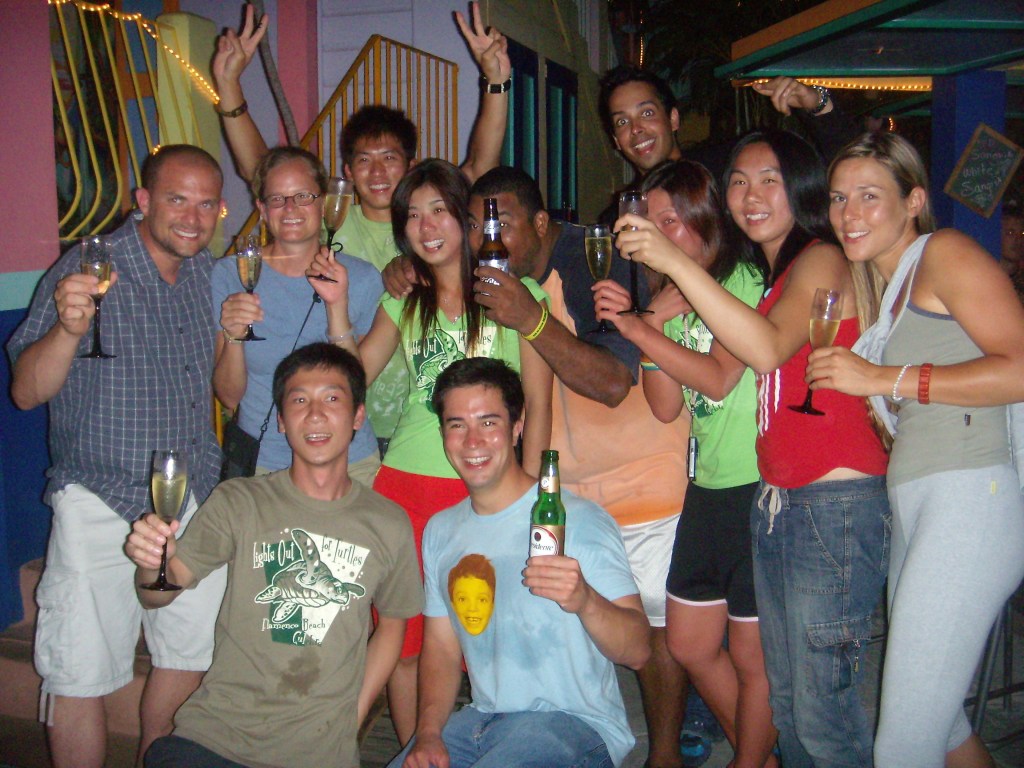
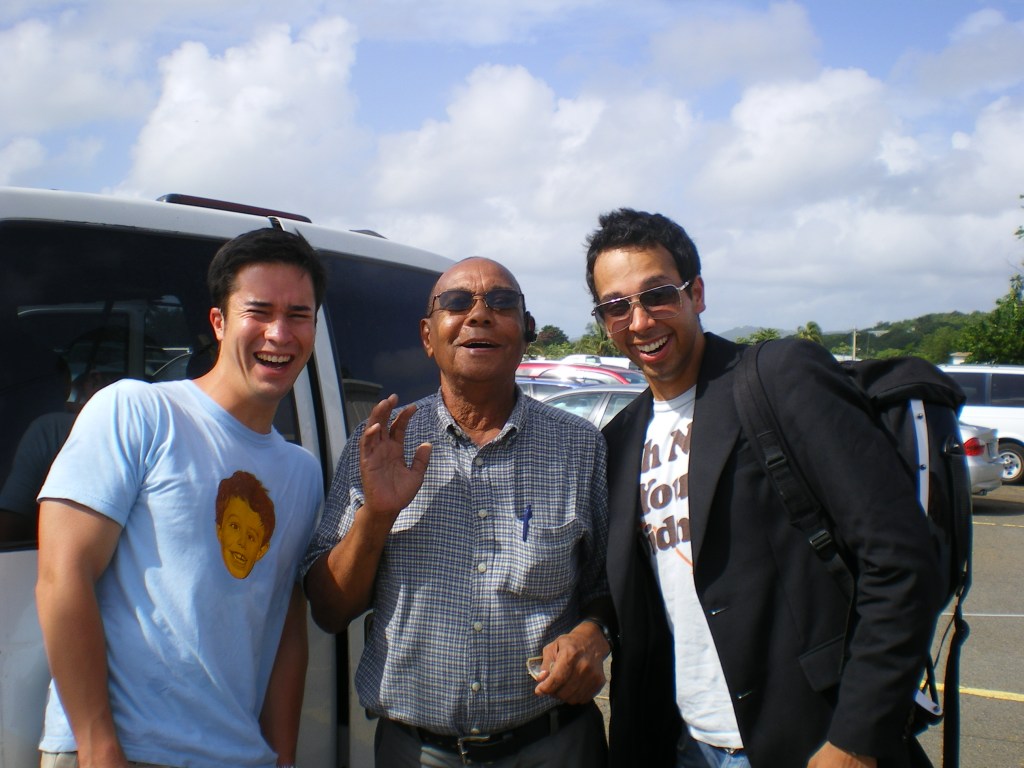
But then someone told someone who told someone who told us: the next morning, we would be able to get a plane, if we wanted, back to San Juan. Asim, like Richard Branson, was somehow sober enough to do the math – he got the cost, divided it by the seats available, and went around looking for people who wanted a seat on the first flight out. I think it was us, Lauren and Sean, and the Chinese. We all gave him cash, and he confirmed on the bar phone, and then we had a round to celebrate.
But our tiny bubble had been popped. Suddenly we were no longer isolated in that tiny room; the world came rushing back in. I went to bed, a bit deflated.
The next morning, we were all at the airport bright and early. It had the feeling of an escape: we were leaving behind the others, for our own safety and comfort, and had no compunctions about that. They would be fine – ferries would start again eventually, maybe that day, maybe the next. We would stay in touch on Facebook. Looking at the plane, I was more worried about its ability to stay airborne than anything else – I could stretch out my arms and touch each side of the cabin. It took off, and landed maybe twenty or thirty minutes later, and we got another taxi, and the storm had passed by then, and a few days later we were back at Dworken and Bernstein, tanned, relaxed, and we had been alive.
And this was what I thought of when my sister told me that Hurricane Hilary hit California.



Three.
The books of August:
- Little Bets – this didn’t win a Pulitzer, but it has been sitting on my shelf, and I read it to confirm my suspicions: it is true that the greatest oaks grow out of the smallest acorns. I liked it, and am using it as a reminder that I don’t have to make huge progress every day – all I need to do is keep working and making slow, steady progress toward my goals.
- The Wager – again, this didn’t win a Pulitzer, but my dad recommended it. It was…not as good as The Lost City of Z, but it was a good story. I almost immediately gave it away – it is not the sort of book one reads twi. e.
- The Great Gatsby – for a year when I only wanted to read books that had won Pulitzers, August was a wash. At least this is a beautiful classic.
Four.
One of the wonderful things about Daniel’s nursery is that they encourage the kids to play and explore, and don’t judge or stop them outside of safety concerns. Recently, he and his best male friend have been playing Wedding; both of them put on dresses and then pretend to get married. It is strange, because I doubt that either of them know what a wedding is or what happens at one, but regardless, they are playing, and it is adorable.
Recently, though, Daniel said that they had been playing Secret Wedding; when pressed, he said that Secret Wedding was like Wedding, but secret, as his friend’s parents had heard about Wedding and told him not to wear dresses because he is “too old” for that. We know they are deeply Catholic, even though the husband has been divorced and has at least two kids with his ex-wife, and the nursery confirmed that they had asked that that Daniel’s friend be prevented from wearing dresses because of their own religious beliefs.
So as soon as I heard that, I asked Daniel about it, and if he felt too old to be wearing dresses. He said no. The day before, I had been clearing out my closet and found a sarong that we had picked up in Indonesia. It was really convenient for beaches, and really hot countries, and REALLY comfortable for long-haul flights, but I thought that I was unlikely to wear it again, so I put it in the thrift store pile. But on hearing that he might want to wear dresses, and thinking he might feel uncomfortable about it because of his friend’s transphobic parents, I went over to the pile, picked out the sarong, and put it on.
“What’s that, Daddy?” Daniel asked.
I explained it was called a sarong. He asked to try it on, so I put it on him, and then he walked around while Alice told him how cool it looked; then, I asked for it back, and wore it for the rest of the evening. Only later did I think: the other kid is Scottish, the mother is Scottish, and we live in Scotland; I kind of want to get him a kilt and see what they say.
Then, a few days later, we were putting butter on bread and Daniel said, “Daddy, butter isn’t good for you.”
I asked where he had heard that. He said his nursery. Then Alice asked who had told him, and…it was the same friend. Apparently his mother wants him to lose weight (the kid is four!), and told him that butter was bad for him.
I almost told Daniel that even the FDA admitted that butter wasn’t that bad, but I didn’t think he would be able to process that. Instead, I told him that anything could be bad, and butter wasn’t actually terrible.
But I was seething, a bit, and also kind of happy. We live in an age when we are considering unfriending these people because they are homophobic, anti-trans, and nutritionally ill-informed, and I suspect nobody would blame us if we said we didn’t want Daniel hanging out with this kid whose parents are clearly going to give him some really deep issues to work through when he is older. I keep on imagining talking with them, and the marriage game coming up in conversation, and pretending that of course, I understand their aversion to him pretending to be married, because, as a good Catholic, GOD FORBID HE GET FAKE DIVORCED. Or I might agree with their food prohibitions, because obviously obesity runs in the family; were they all moderating their intakes?
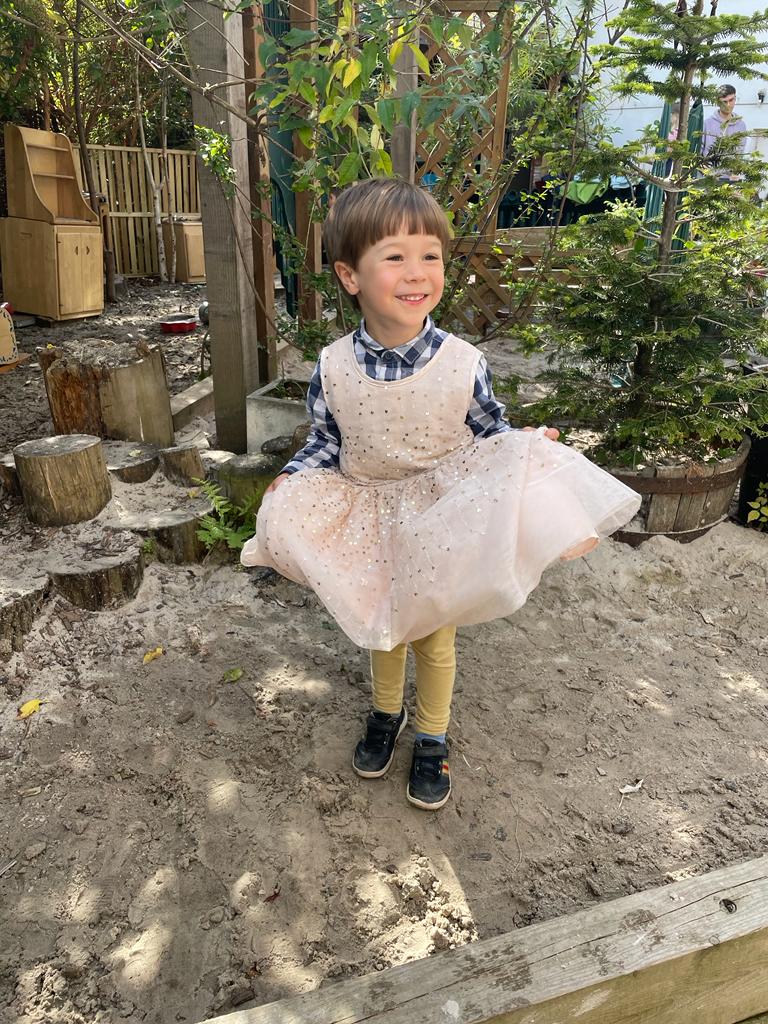
Also, for the record, I love this photo, and this kid:
Five.
Nick is suddenly talking.
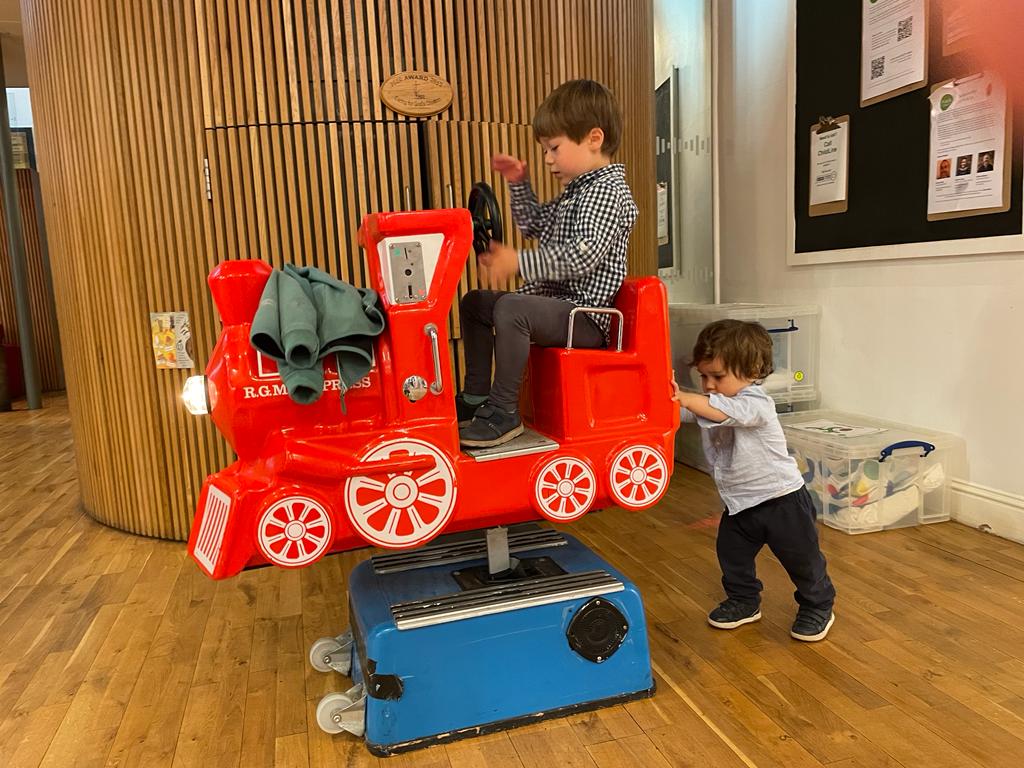
He says “Hiya” and “buh-bye,” and “tank oo.” He sometimes chats a lot, and I wonder what he wants to tell us. He also gives amazing, sloppy wet kisses, and cuddles where he just melts into my shoulder.
And while I spend time with him, I often feel guilty for not being able to spend as much time with him as I would like. I was able to focus on Daniel when it was just him; I don’t have the same luxury with Nick. At least he has a big brother to push around.
Six.
This needs to go out. No more delays. So I won’t get to ten.

 Andrew Samtoy
Oh boy, I really love these. Your first entry with David made me think of Bowling Alone, one of Obama’s favorites, if I remember correctly. Now Covid has made things even harder. I really favor universal service of some kind to encourage more encounters with others when we’re forming our adult lives.
Daniel’s dress is smashing. Hope is buddy survives his parents. I am besotted with your kids. Kisses and hugs for them!
LikeLike