

1. Make friends with the manager of the fruit and vegetable section of the local grocery store.
His name is Ibrahim. He is from Senegal, and has been in Italy for ten years. His wife studied in Paris, and they were taking a vacation in Milan when she was six months pregnant with their first child; she unexpectedly went into labor, and delivered the baby prematurely in the hospital. The doctors said that they needed to move to Milan for at least six months so that they could take care of the baby; Ibrahim and his wife gave up everything in France, including their careers, to move to Italy. His current goal is to visit America, and is in the process of applying for a visa; remember conversations that you had with American diplomats in the UK, as well as your smattering of immigration law, and give him informal advice. Review his application, and tell him it is fine. If you make friends with him within the first few days, you will find that soon the other stockers, the bakers, the cooks, and the checkout people will all be friendly to you, and even the security guard, 6’7″ and huge, paid to look severe, will smile and nod and say “ciao” every time you enter and leave, and will offer to take your shopping cart and put it away so you can take care of your kids, and this will set you apart from every other shopper, including the locals, and the staff will forgive you your faults – especially the fact that you can’t speak Italian.

2. Become a regular at the Vino Sfusa shop.
This is a “bulk wine” store, where a sommellier sells wine from taps or boxes and you can get it by the litre. A litre, generally, costs about 4-5 euros; there is no surcharge for buying smaller portions. Explain that you would like to try to taste everything she has, litre by litre; start early on in the trip, because she has a lot on tap. She will soon cut off conversations with other people to talk to you whenever you walk in the door; tell her your impressions of the last thing she gave you, and she will change the wines she has on tap to make sure that the next one is different from the previous ones, and you will be able to taste it on your visit. On a slow day, when you are the only person in the shop, admit that, as an American, you think Americans drink wine incorrectly, and don’t know much about it; she will explain that besides the varietals and regions, there are different kinds of wines that Italians drink, broken down into bulk/table wines and special wines, and that what Italians consider table wines are young, not matured, and less complex, but far more drinkable and less affecting than special wines, which are more expensive, aged, and contain more complex chemicals that contribute to intoxication and general “heaviness.” She will say that Americans hear that Italians drink “wine” for lunch, and think it is a nation of drunks, when really, it is a different “wine” that we can’t get in the USA – that our perception of “wine” is what Italians save for truly special occasions, when they want to get absolutely plastered. Tell her that you can drink a half-litre of her wine without any bad effects, and you now understand why, and she will raise her hand as if to say, “Exactly,” and you will share one of those moments where people communicate.

3. Bring really cute kids to gelato shops – and then bring them back
There are tons of tourists it Milan, and oftentimes, you will receive curt, unfriendly service, particularly from fancy gelato shops that don’t anticipate that they will need return customers. Indeed, the customer service here often seems worse than in the UK; people don’t seem to care about helping you. In this case, it helps to not only have really cute kids, but to have those kids really enjoy the gelato, and tell the workers so in their little voices; perhaps have the five year old tell them that “that was the best ice cream I have ever had in my entire life,” which the staff, even with their limited English, will think is just about the most adorable thing in the world, and when you return, they will remember, and treat you kindly.
4. Cook
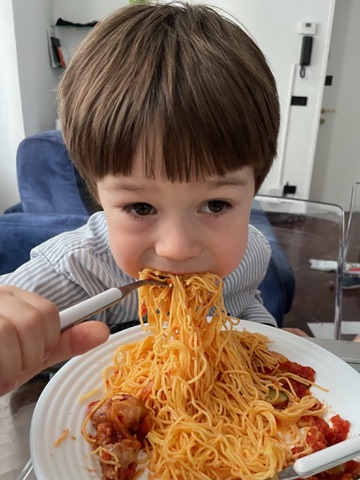
Most advice is to eat out as much as possible, to really understand how good Italian food is. This is generally good advice – the effort and attention that Italians put into food is exceptional, and the stereotypes are all true about the pizza, pasta, and the bread just being on a different level from what we get at home.
At the same time, exceptional food comes from exceptional ingredients, and the ingredients available to ordinary mortals here are on a different level. The cheap bag of potatoes at the above-mentioned grocery have a DOP; they are, perhaps, the best potatoes I have ever pulled out of a microwave in a quick-bake, put into a ribollita, or boiled and mashed. The canned tomatoes taste better than fresh tomatoes in Scotland; the celery has an umami, the carrots a different depth of sweetness and crunch. We often make the same meals we would at home, but with the ingredients here, they take on a new vibrancy, as if one has spent one’s whole life with sunglasses on and suddenly, in the middle of a Pantone factory, they are taken off.
So cook the food you normally would, and it will be different, and amazing, and you will not want to go back to the way things were before.

5. Eat pizza
At the same time, though, eat the pizza. Nothing, anywhere else, compares.
6. Get a haircut from an old man barber
You arrived in Italy in dire need of a haircut. There are lots of barbers here; a haircut generally seems to run about 30 euros, but some people charge 60 or more. Many barber websites have stories about how they have a great tradition in cutting hair; some have gimmicks, like serving drinks while you get your hair cut, or having a sports locker theme, or being a man cave.
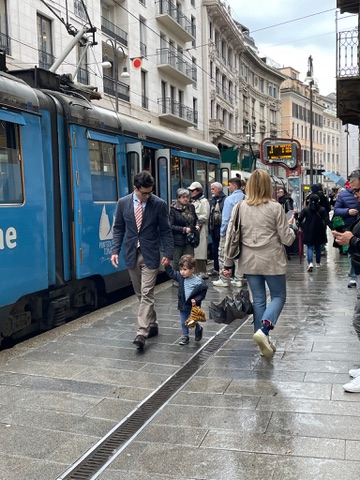
This is absolutely not what you want. Instead, you want a haircut. Find the old man barber on Google Maps, and take the tram to him. Arrive in the pouring rain to a closed shop, with little around to shelter you. Frantically search for alternative barbers on Google Maps for ten minutes until he slowly walks over and unlocks his door; laugh with relief, which makes him raise his eyebrow, confronting a madman. Use Google Translate to ask if he can cut your hair; “È possibile tagliarsi i capelli oggi?” “Si,” he will nod, as he fiddles with the lock. Step back and let him open his shop at his own pace; sense that rushing him will do you no favors. He won’t speak English, but when you think he he asks what you want, tell him he is the professional, and you submit fully to him, and do it in Spanish, because you don’t want to try Google Translate in the middle of such a potentially fateful encounter. Suggesting this level of detachment about one’s hair elsewhere will usually result in the barber trying to cut your hair similar to what they think you had before, based on the relative length of hair on your head. Here: no. He understands your Spanish, and will walk around the chair you are in, combing, spraying, adjusting, combing, tilting, prodding, pushing, combing, before he picks up his scissors. And the haircut will be done completely by scissors; he will make a half-hearted pass with ineffective 1950s clippers, but will put them down with a grunt and mutter something that makes you think he thinks they are more trouble than they are worth for an artist such as himself, and they will not be turned on again.
He will tell you about Milan, other places in Italy, and in the meantime will give you perhaps the most precise cut you have ever had. You will feel as if he is sculpting your image, and soon you will realize that you have become a piece of material for a master craftsman. Did David feel like this when Michaelangelo was freeing him? You will think he is done after one pass around your head, and will move to get up, but he will push you back in the chair with a murmur and a smile, take another moment to review his work, and then make two more passes, getting every hair perfect. He will spend two minutes simply trying to get the short hairs in a square centimeter on the right side of the back of your neck to be exactly the right length; with clippers, this would take three seconds at the most, but you do not question him. He will spray you down again, then blow dry your hair to the point you feel as if your scalp is being seared, and then use hair spray to fix his creation. At this moment, someone will walk in and say “Ciao!” The barber will tell him about you, and the new customer will start talking in a thick New York accent. He is from Queens, is 57 (although he looks 40), went to Colombia for undergrad and Johns Hopkins for graduate school, was studying in Italy, met a girl, and never moved home.
Bring cash. If you don’t have 30 euros, the new customer will explain to the proprietor that you are just going to go get it from the bank around the corner; you realize it is the same ATM you used a few days before, the only one you’ve used in Italy. There is an assumption that, as a fellow American, the new customer is vouching for you and that you are a good person and would not break your word. Which is true. When you leave, shake hands all around, wish everyone well, and get some pretty strong looks on the walk back to your AirBNB.

7. Bring kids out all over, and speak Spanish
Italians love children. The old ones, especially, have absolutely no shame about caressing the heads of passing strange children – on the trolley, in the street, in shops and restaurants. Then, they will start a conversation with the father. If you don’t speak Italian, and they don’t speak English, speak Spanish. You will find that it is close enough that if they only speak Italian, they will understand you, and you will understand them; more often than not, you will find that they are married to someone from Spain, so they speak Spanish as well, and suddenly you can have an incredibly intimate conversation with them about their lives, Milan, work, family, and the future, all while on a park bench, at a water fountain, or eating a french-fry and hot-dog pizza on the street.

8. Be incredibly lucky so lots of things are free
As Machiavelli may have advised, plan your luck. If possible, find that you have scheduled your trip for the first week of the month, but you left getting tickets for The Last Supper until they were all sold out. Read the fine print; it turns out that the first Sunday of the month is completely free, although you have to reserve these tickets at noon on the previous Wednesday.
So set your alarms. The previous Wednesday, log on; take a minute to think that the website is broken, but then, miraculously, it works, perfectly. Reserve the tickets. Think that surely this can’t be; surely you didn’t just score some of the hottest tickets in town for free? But it is true. And walking into the room, and seeing it, will be like seeing evidence of God on earth, or at least the incredible perfection of one man’s skill.
And when you visit the Pinacoteca de Brera, get there just when the ticket machines go haywire. Attempt to buy tickets, and get charged, but schedule it so that the tickets do not print out; then, go to the ticket desk and explain what happened. They will pass your around, but eventually, you will get to the right person, and they will sigh and ask how many tickets you need. Tell them four, and they will print out comp tickets for you. Go around the museum; enjoy it. Then, a few hours later, when the machines are working again, they will reverse your transaction, and your visit will have been free.

9. Really consider the impact of city states versus nation states
A long time ago, we had a rum party. Knut always prepared the lectures thoroughly, and this one was a real corker – it was about the history of British and French colonies, and how the rums and rhums diverged, and why, and the impact of the sugar beet on distillation, because the French developed sugar beets and could produce their own sugar, leaving the colonies to use all of the sugar cane for rhum, whereas the British had to rely on colonies for sugar, leaving only the molasses for rum, and the fact that Italian city states, as opposed to the nation states, never acquired sufficient tropical colonies, so never had any strong rum tradition; they were too caught up in intra-peninsular political games to develop their own sugar based spirit. He concluded by stating that this, in his view, was a conclusive judgent about the relative weaknesses of the city-state system versus the nation-states. He took over an hour to make a five-second joke, which I submit as conclusive evidence of his genius.
But while here, learn about Milan as a nation. Consider the north and the south. Think about the ways in which it will be different from the other places you visit in Italy. Learn about the Papal States. Read about Machiavelli, and then read Machiavelli. Question whether the city-state system is a good model for federalism, or whether federalism is an improvement – particularly as it relates to the development of distinct cultures and the furtherance of culture itself. Leave that as an open discussion to continue as you move on.
10. Respect the culture(s)
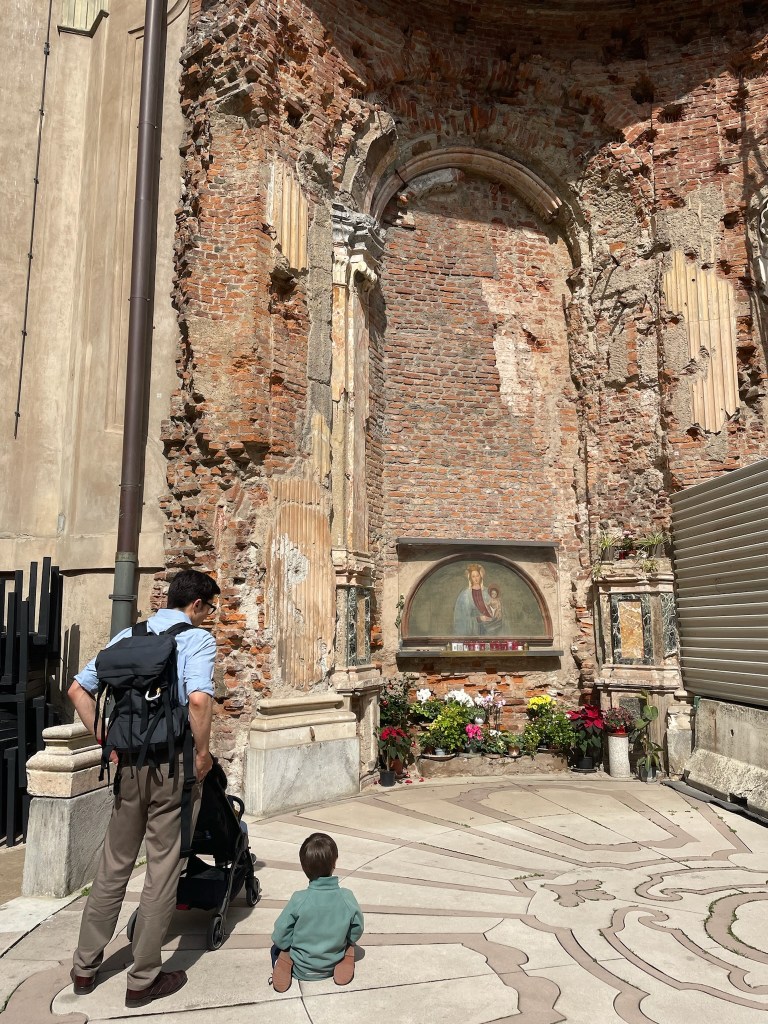
Realize that Italy has at least 2,000 years of distinct and competing cultures, and that this has led to the adoption of particular institutions, activities, and norms that came about for very specific reasons. Think about how American culture is so new, and is always being renewed and recreated and reconsidered, that its power as a hegemon may not be the best thing for the world, but that the world is resilient, and cultures are resilient, and no other place will simply adopt American or Chinese or Russian culture without giving it a local flavor, without modifying it for the circumstances and history. Tell Italians that you respect their culture, and have a lot to learn from it; suggest that there are probably things that you don’t fully understand that they don’t like about their own culture, but that, on the whole, you are looking at it with a completely open mind. Watch them open up to you. Hear their complaints, and think that people, everywhere, are not all that different after all.
That’s my top ten things to do in Milan. If you come here, I hope you enjoy the city as much as we did!
 Andrew Samtoy